
The automation discussion in precast manufacturing has changed direction. Ten years ago the case for a robot was quality consistency; in 2026 the case is labour, and the numbers behind it are not subtle. Rebar automation programmes at Gulf giga-projects have reported reductions in manual steel-fixing labour of up to 80%. Robotic casting lines combined with BIM-driven production have cut cycle times by around 30% and pushed scrap below 2%.
Those are project-level results rather than a general rule, and they come from facilities built to giga-project budgets. The useful question for the majority of producers is narrower: which parts of a precast plant repay automation first, in what order, and where does it stop being worth the capital? This article sets out what is actually being automated in 2026 and how to sequence the decision.

What is actually being automated
Automation in a precast plant is not one thing. It is four different investments with different payback profiles, and treating them as a single decision is the most common cause of an expensive plant that still depends on manual labour for its bottleneck.
The ordering in that table is not arbitrary. Batching sits first because a plant cannot produce a consistent element from an inconsistent mix, whatever else is automated. Reinforcement sits second because it is the most labour-intensive manual task in most plants. Curing sits fourth in the list but is usually second in effect on output, for a reason set out below.
The labour arithmetic
The straightforward argument for automation is that labour is becoming harder to recruit and more expensive to keep, particularly for the heavy manual work of placing and fixing reinforcement. That is true in most markets in 2026, and it is the reason automation has moved from a quality topic to a cost topic.
There is a second half to the argument that is less often stated. Automation changes the shape of the crew, not only its size. A plant with a batching system, a mesh welding machine and a powered mould handling system can be run by a smaller number of trained operators, and a trained operator is a different retention problem from a general labourer. Producers who automate usually find the second effect matters more over a five-year horizon than the first.
The counter-argument is also real. Capital intensity in precast production is high, and an automated line only pays back at a volume that keeps it loaded. A line that runs at half load is more expensive per element than a manual plant at full load, because the capital cost does not scale down with the order book.
Curing is where the first gains usually are
Output from a precast bed is set by how many times the bed can be turned, and the bed turns as soon as the element can be stripped. That makes curing the most leveraged process in the plant, and it is the one where 2026 technology has moved furthest.
Sensor-based cure monitoring inside moulds and forms, reporting maturity rather than elapsed time, allows a plant to strip on a measured criterion instead of a fixed clock. Reported results from plants using it show cycle time reductions of up to around 15%. In a plant running a two-shift day, that is close to one extra bed turn per day, which is a larger output gain than most forming machine upgrades deliver.
The same technology produces a durability record as a by-product. Curing history per element is exactly what a certification regime asks for, and plants that need to demonstrate controlled curing will find the monitoring pays for itself in evidence as well as in throughput.
Reinforcement: the largest manual task
Placing and fixing reinforcement is the heaviest and most repetitive manual job in a precast plant, and it is where the reported reductions are largest - up to 80% of manual steel-fixing labour on programmes that have automated mesh production and positioning.
For most producers the practical entry point is not a robotics programme. It is an automatic roll welding machine for mesh and cage production, which converts a manual cutting, bending and tying operation into a machine output that matches the plant's casting programme. The gain is twofold: the labour content falls, and the reinforcement geometry becomes exactly repeatable, which matters for cover and for the structural calculation.
There is a sequencing point here. Mesh automation only pays if the mesh specification is stable across a run. Plants producing many different elements in small batches should standardise the mesh design before they buy the machine, or they will spend the capital and keep the manual work.
Choosing a level of automation
Automation decisions are usually presented as a scale from manual to fully automated. The more useful framing is what each level suits, because the right answer depends on the order book rather than on ambition.
The step from manual to semi-automatic is where most of the available return sits, because batching accuracy, vibration repeatability and curing records are the three things that decide whether output is predictable. The step from semi-automatic to a full automatic line is a volume decision: it requires an order book that keeps the line loaded, and it requires the element design to be stable enough that circulating moulds make sense.
What automation does not fix
Three things are worth stating plainly, because automation projects frequently disappoint for these reasons rather than for technical ones.
- A weak element design. Automated production of a section that is difficult to cast produces rejects faster, not fewer.
- A bed that has settled. Machines precise enough to hold a tight tolerance will hold it around whatever error the bed already has.
- A variable order book. Automated lines reward repeat volume and penalise changeovers, so a plant with a wide product mix can find a manual arrangement more productive in practice.
In all three cases the constraint is upstream of the automation. Fixing the bed alignment, standardising the element family and stabilising the mesh specification cost far less than an automated line and usually deliver the gain that was expected from it.
Frequently asked questions
Where should a small precast plant start with automation?
With batching accuracy and curing monitoring. Both are comparatively modest investments, both directly affect consistency and bed turns, and both generate records that increasingly matter for certification. Reinforcement and handling automation follow once the order book justifies them.
How much does curing monitoring actually improve output?
Reported reductions in cycle time are up to around 15%, achieved by stripping on measured maturity rather than on a fixed elapsed time. The exact gain depends on your mix, your ambient conditions and how much margin your current curing practice carries - a plant that already strips late has more to gain than one that strips on test results.
Is a fully automatic line necessary to serve large projects?
Not always, but the direction is clear. Where projects run multi-shift against fixed dates, plants with monitored curing and automated reinforcement carry a lower labour requirement per element and a lower reject rate. Where the order book is smaller or the product range is wide, a semi-automatic plant is usually the more productive choice per unit of capital.
Does automation require a different machine, or can existing machines be upgraded?
It depends on the process. Batching and curing instrumentation can often be retrofitted to an existing plant. Forming and handling automation generally requires machines specified for it, because the repeatability has to be built into the drive and control system rather than added afterwards. That is a specification decision at the enquiry stage.
Technical conclusion
Automation in 2026 is being pulled by labour availability rather than pushed by technology, and the sequence that repays investment is reasonably consistent: batching and mixing first, reinforcement second, curing alongside it, and forming or handling automation once volume justifies a loaded line. The headline results from large programmes - cycle reductions of around 30%, manual steel-fixing labour down by up to 80% - are achievable, but they rest on standardised element designs and stable order books rather than on the machinery alone.
The decisions that matter are taken before the order: which processes to automate, in what order, and whether the element family is standard enough to justify it. Producers who answer those three questions first generally find that a modest, well-sequenced investment outperforms a large one aimed at the wrong process.
What we supply
We build the production equipment on both sides of that decision. On the plant side, the wall panel production line integrates forming, curing and handling into a single flow rather than treating them as separate purchases, and the JS500 concrete mixer provides recipe-driven batching at the head of it. For reinforcement, the automatic roll welding equipment converts mesh and cage production into a machine operation matched to the casting programme.
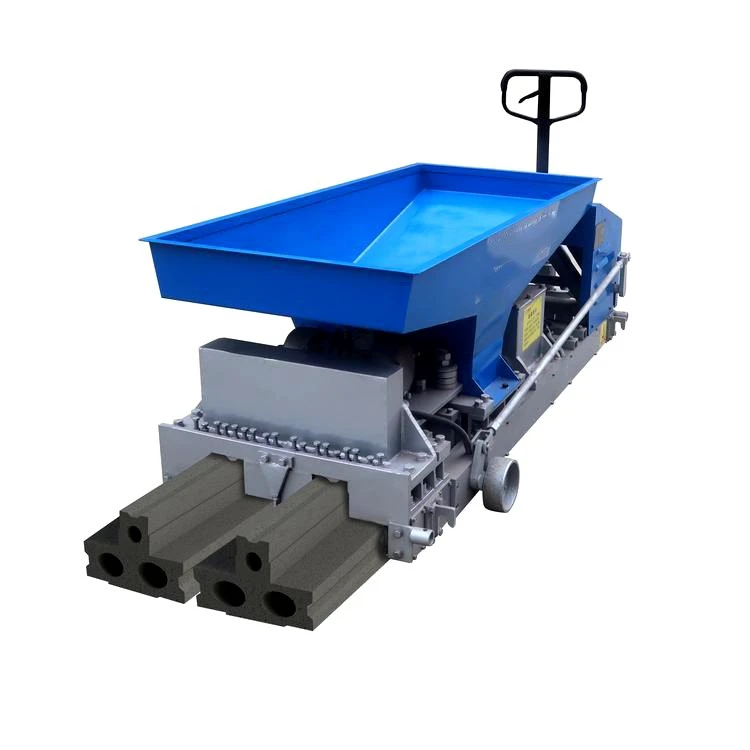
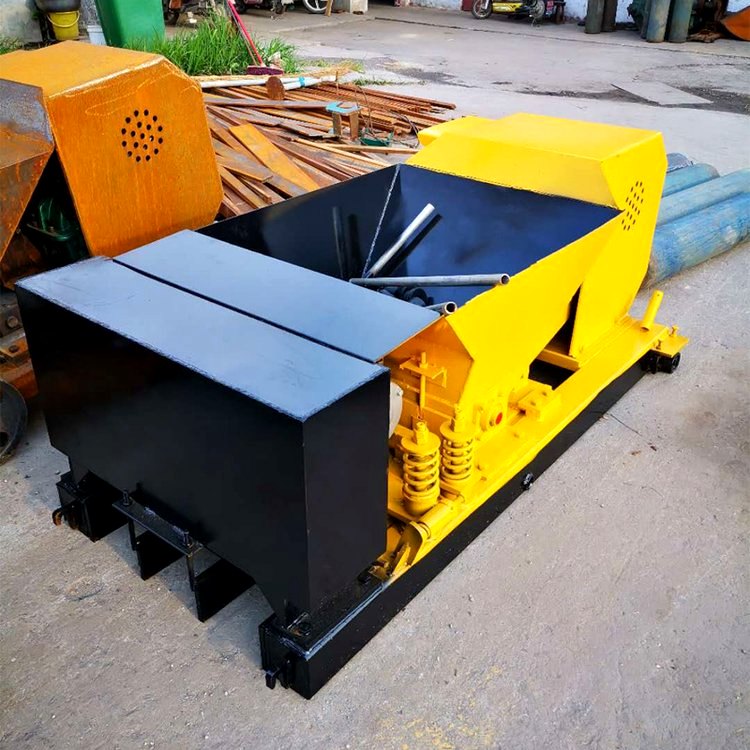
For plants intended to run with minimal manual intervention on a single product, the full automatic drainage ditch forming machine and the wider concrete wall machine range show what a single-element automatic line looks like in practice. Every machine is built to order, load tested before shipment, and supplied with the controls documentation your maintenance team needs to keep the settings repeatable.
Next step
Tell us your element, your target output and the crew you can realistically employ. We will tell you which processes return the investment first in your case, and which parts of the line do not need automating at the volume you are running - including the cases where the answer is that you should not automate yet.
Send the element family, the shift pattern and your current labour cost structure through the contact page, and we will come back with a sequenced specification rather than a single machine quotation.