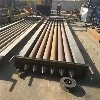


Work moving indoors: casting, curing and finishing in a controlled plant instead of on an exposed site.
Ask a precast plant why it is adding capacity this year and the answers cluster around three things. Site labour is harder to staff and harder to keep. Project schedules have less slack than they did. And on a growing share of public work, the carbon in the material is now part of how the contract is awarded.
None of the three is new. What is new in 2026 is that they are pointing the same way at once - and that direction is into the factory.
One: skilled site labour is the binding constraint
Formwork crews, steel fixers and finishing trades are the roles contractors report most difficulty filling. When those roles cannot be staffed at the expected rate, the schedule is set by the crew you have rather than the programme on the wall.
- A casting yard and a plant need different labour from a site - the work is repeated, not improvised
- Factory output can be planned, so a shortage of one trade stops one station, not the project
- Weather stops site work; a covered plant keeps forming through the same week
- The build-to-drawing discipline of precast suits buyers who cannot absorb schedule drift
For a contractor weighing precast against cast-in-place, the labour saving is usually described as fewer site hours per square metre supplied - not a lower headcount overall. That framing is worth keeping: precast moves a labour risk into a manufacturing plan.
Two: schedule pressure is now structural
When the cost of capital is high, a delayed project is not just a late project - it is a financing problem. That has moved schedule certainty up the list of what buyers pay for.
Precast attacks the schedule in a specific way: site preparation and component production run at the same time rather than in sequence. By the time the foundation is ready, the pieces are cured and waiting - which is why plants are being asked for output guarantees, not just sections.
Three: carbon has become a procurement line item
For years, low-carbon concrete was a disclosure exercise. In 2026 it is increasingly a scoring criterion - the EU carbon border adjustment mechanism entered its definitive regime for cement in 2026, and several public buyers now apply clean-material thresholds to awarded work.
Precast has a natural advantage here, and it is not about the cement. It is about waste and control:
- Surplus mix in a plant can be reclaimed and reused; an over-order on site is usually lost
- Batch records are auditable, which is what a carbon-linked specification actually asks for
- Curing and stripping can be scheduled so fewer pieces are rejected and re-made
- Hollow and cored sections use less material for the same function - a saving that shows in the embodied carbon figure

Cored sections cut material per metre of finished product - one of the few carbon savings a plant can make without changing the mix.
What this means for a plant deciding on equipment
The three forces are pushing plants in the same direction, and it is not necessarily towards a bigger machine. It is towards a line that can hold a schedule.

Cored panel products let a plant answer both the schedule and the embodied-carbon questions with the same section.
The practical conclusion for the next season
Plants that added capacity in the past two years did it largely to meet demand. The plants adding it now are increasingly doing it to hold a schedule they have already promised.
- Size the beds for the schedule you have committed to, then the machine to the beds
- Standardise on a small number of sections so moulds and cores do less changeover work
- Build the quality record into the process - tested before shipment, documented per piece
- Keep one spare mould so a section change does not stop the line
None of that is new advice. What is new is the price of getting it wrong - a plant that cannot hold a schedule now loses the next order, not just the margin on this one.
Frequently asked questions
Is precast really growing, or just the marketing around it?
The direction is not in dispute - the debate is about speed and region. What is measurable is that buyers are asking plants for output guarantees and documented quality where they used to ask for a machine specification. That change is happening regardless of how any single market forecast lands.
Does moving work into a factory reduce the workforce?
It moves the labour rather than removing it. The work shifts from site trades to plant operators, and from improvised tasks to repeated ones. The saving most contractors point to is fewer site hours per square metre supplied.
What section should a plant standardise on?
The one that matches the demand in its own market. A plant serving housing wants cored slabs and panels; a plant serving boundary walls wants panels and posts as a pair. The mistake is to carry too many sections and lose the line to changeovers.
How does precast help with carbon targets?
Mostly through waste and control rather than a magic mix. Reclaimed surplus, auditable batch records, fewer rejects and cored sections that use less material per metre all show up in the embodied carbon figure.
Do I need a bigger machine to meet a schedule?
Usually not. The binding constraint on most lines is the beds and the curing cycle, not the forming speed. Adding beds and shortening the stripping cycle normally buys more schedule certainty than a larger machine does.
What is the first thing to get right?
The section, made to drawing and repeatable. Everything downstream - beds, curing, stacking and the carbon question - depends on the plant being able to make the same piece again tomorrow.
Related machines on this site
Technical conclusion and next step
01 · TECHNICAL CONCLUSION
Technical conclusion
The 2026 case for precast is a schedule case first and a carbon case second. Buyers are asking plants to hold a programme, and that puts the beds, the curing cycle and the repeatability of the section ahead of the headline forming speed.
02 · WHAT WE SUPPLY
What we supply
We build the forming machines at the centre of a precast line - slab, panel, post, purlin and partition board machines - and every unit is test-run under load before shipment, with the running video sent for confirmation before the container is loaded.
03 · NEXT STEP
Next step
If you are adding capacity for a schedule you have already committed to, send us the sections and the output you need. We will tell you which machine family fits and what the beds and the curing cycle have to look like to hold it.