
JS500 Concrete Mixer | 0.5m³ Twin-Shaft Forced Mixer - Feiyu Machinery
JS500 Concrete Mixer: Complete Industry Guide
Professional 0.5m³ Twin-Shaft Forced Mixer for Global Construction Projects
Get Free QuoteJS500 Mixer Overview
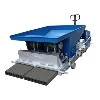
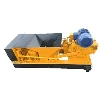
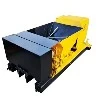
The JS500 concrete mixer is a twin-shaft forced mixing machine with a nominal discharge capacity of 0.5 cubic meters (500L). As part of the widely recognized JS series, it represents an optimal balance between performance and practicality for small to medium-scale construction projects worldwide.
The JS500 employs a twin horizontal shaft design with counter-rotating mixing arms that create intensive forced mixing action. This mechanical agitation ensures complete homogenization of all concrete components within 60-90 seconds, producing consistent, high-quality batches suitable for various construction applications.
Featuring robust construction with high-chromium alloy mixing blades and wear-resistant liners, the JS500 is engineered for durability. The machine incorporates an automatic lubrication system, centralized electrical controls, and options for pneumatic or hydraulic discharge gates, making it both reliable and user-friendly.
The JS500 can efficiently mix various concrete types including dry-hard concrete, plastic concrete, fluid concrete, lightweight aggregate concrete, and different mortars. This versatility makes it suitable for diverse construction requirements from structural elements to finishing works.
Technical Specifications
| Parameter | Specification | Unit |
|---|---|---|
| Discharge Capacity | 500 | Liters |
| Feeding Capacity | 800 | Liters |
| Theoretical Productivity | ≥25 | m³/h |
| Maximum Aggregate Size | 60/80 (gravel/pebble) | mm |
| Working Cycle Time | 60 | Seconds |
| Mixing Motor Power | 18.5 | kW |
| Hoist Motor Power | 5.5 | kW |
| Water Pump Power | 0.75-1.1 | kW |
| Mixing Blade Speed | 35 | r/min |
| Total Weight | Approx. 4000 | kg |
| Dimensions (L×W×H) | 3030×2300×2680 | mm |
*Specifications may vary slightly between manufacturers. Data compiled from multiple industry sources.
Application Scenarios
The JS500 mixer is versatile equipment suitable for various construction scenarios worldwide:
Precast Component Factories
Ideal for manufacturing concrete columns, beams, slabs, and other prefabricated elements with consistent quality requirements.
Road & Bridge Construction
Used in highway projects, bridge construction, and infrastructure development where reliable concrete production is essential.
Building Construction
Suitable for residential and commercial building projects, providing on-site concrete mixing for foundations, walls, and structural elements.
Water Conservancy Projects
Applied in dam construction, irrigation systems, and water treatment facilities requiring durable concrete structures.
Port & Wharf Construction
Used in marine construction projects where corrosion-resistant concrete mixes are required for durability in harsh environments.
Rural Infrastructure
Perfect for small-scale rural development projects, agricultural buildings, and local infrastructure with limited space and budget.
Key Advantages
High Mixing Quality
Twin-shaft forced mixing ensures complete homogenization of all materials, producing consistent concrete batches with uniform strength and texture.
Efficient Production
With a theoretical output of ≥25 m³/h and 60-second cycle time, the JS500 delivers high productivity for continuous operations.
Versatile Operation
Can work as a standalone unit or integrate with PLD batching machines to form simple concrete mixing plants, offering operational flexibility.
Durable Construction
High-chromium alloy mixing arms and wear-resistant liners extend service life and reduce maintenance costs in demanding conditions.
Energy Efficient
Optimized design and efficient motor systems reduce power consumption while maintaining high performance levels.
Easy Maintenance
Centralized lubrication system and accessible components simplify routine maintenance and reduce downtime.
Global Market Analysis
China remains the world's largest producer and exporter of concrete mixers, with exports reaching $279 million USD in 2022. The JS500 model is particularly popular in developing markets due to its optimal balance of capacity, performance, and affordability.
Key Export Markets:
- Southeast Asia: Vietnam, Malaysia, Indonesia, and Thailand represent growing markets with increasing infrastructure development.
- Middle East: Turkey, Iran, and Saudi Arabia are major consumers with ongoing construction projects.
- Africa: Infrastructure development across the continent creates demand for reliable concrete equipment.
- Latin America: Growing construction sectors in Brazil, Mexico, and other countries present export opportunities.
Certification Requirements:
For successful export to international markets, JS500 mixers typically require:
- CE Certification: Mandatory for European markets, ensuring compliance with EU safety and environmental standards.
- ISO Certification: International quality management standards that enhance market acceptance globally.
- Local Certifications: Country-specific approvals may be required for certain markets (GOST for Russia, etc.).
Production Calculator
Estimate your daily concrete production with the JS500 mixer:
*Calculation based on theoretical productivity of 25 m³/h with efficiency adjustment. Actual production may vary based on site conditions and operational factors.
Frequently Asked Questions
The JS500 can efficiently mix various concrete types including dry-hard concrete, plastic concrete, fluid concrete, lightweight aggregate concrete, and different mortars. This versatility makes it suitable for diverse construction requirements from structural elements to finishing works.
Yes, the JS500 can operate independently as a complete mixing unit. It can also be integrated with PLD series batching machines to form simple concrete mixing plants, or serve as the main mixer in HZS25 batching plants, offering excellent operational flexibility.
Regular maintenance includes checking and lubricating the gearbox, inspecting mixing blades and liners for wear, cleaning the discharge system, and ensuring electrical connections remain secure. The centralized automatic lubrication system reduces manual maintenance requirements.
JS500 mixers for export typically come with CE certification for European markets and ISO quality management certification. Additional country-specific certifications can be arranged based on destination market requirements.
Standard models typically ship within 30 days after order confirmation. Customized configurations may require additional time. Shipping methods include sea freight (FOB, CIF terms) with delivery times varying by destination.
© 2026 Jining Feiyu Electromechanical Technology Co., Ltd. All rights reserved. | JS500 Concrete Mixer Export Division
This page contains technical information compiled from industry sources including manufacturer specifications and export market data.