



Lightweight Hollow Partition Board Making Machine Precast Partition Panel Machine 90 To 200 mm manufacturers

Lightweight Hollow Partition Board Making Machine Precast Partition Panel Machine 90 To 200 mm suppliers

Lightweight Hollow Partition Board Making Machine Precast Partition Panel Machine 90 To 200 mm factory

Lightweight Hollow Partition Board Making Machine Precast Partition Panel Machine 90 To 200 mm best

Lightweight Hollow Partition Board Making Machine Precast Partition Panel Machine 90 To 200 mm high quality
Lightweight Hollow Partition Board Making Machine Precast Partition Panel Machine 90 To 200 mm

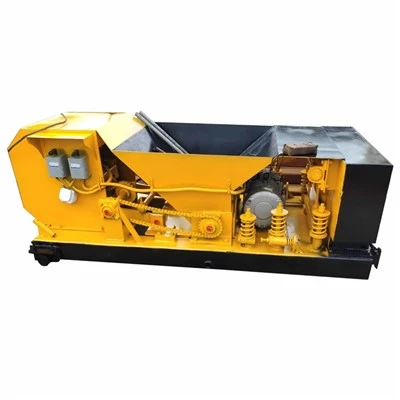
A partition board machine on the bed: the cored mould forms a lightweight internal wall panel in one pass.
A hollow partition board machine forms the cored panels used for internal walls - factory offices, site accommodation, cold-store partitions and drainage covers. The board is light, so it can be handled by two people and moved into a building after the structure is up.
This page covers the six standard board sections we build from 90 to 200 mm thick, the core layouts, the materials a partition board line usually runs, the drainage and channel sections the same machine can form, and what to check before ordering. Figures come from our own build sheets.
What a partition board machine does
The board is a thin, wide, cored panel. The machine forms it on a level bed and leaves the cored section behind, the same way a slab machine does - the difference is the board is lighter and the cores are laid out to suit a wall rather than a floor.
- A cored section - the cores cut weight so the board can be lifted and handled by hand
- A set thickness and width - the board is formed to a wall module, usually 600 mm wide
- Cores laid in single or double rows - this is what lets services run through the wall
- A flat, paintable face - the board is usually finished on site, so a clean face matters
- One machine, more than one section - a different mould and core layout forms a different board

Forming in progress: the cored mould travels the bed and leaves a lightweight board behind it.
The six board sections we build
The six standard sections cover most internal partition work, from a 90 mm board for light partitions to a 200 mm board with a double row of cores. Every figure is from the current build sheet.

The forming position: the core former that leaves the voids running through the board.

Finished boards: cured and stacked, light enough for two people to handle on site.
Materials a partition board line usually runs
The machine forms the section; the mix decides the weight and the strength. Partition boards are usually made lighter than a structural slab, which is what makes them a different mix problem.
- Cement as the binder, with a clean, well-graded fine aggregate
- Lightweight aggregate or industrial by-products such as fly ash are commonly used to cut board weight
- Clean water and a stiff, low-slump mix - a wet mix slumps a wide, thin board
- Small aggregate only; oversize stone shows on a 90 mm board
- Reinforcement is light - often a thin wire mesh or cold-drawn wire across the section, not the heavy layout used in a structural slab
If you already have a local source of a lightweight aggregate or a by-product fill, tell us before you order. The core layout and the vibrator duty are chosen around the mix, so it is worth fixing the material first.
The same machine forms drainage and channel sections
The cored board machine is also used to form the flat and channel sections that go into site drainage - river channel boards and open drainage sections. These are the same idea as a partition board: a thin cored or profiled panel formed on a bed. Machines built for drainage work directly include the drainage ditch forming machine.
- River channel boards and drainage covers formed on the same bed
- Moulds made to a channel or cover profile for local drainage work
- A useful second product for a partition board line that would otherwise stand idle
- Ask us for a channel drawing and we will confirm whether it can be formed on your machine

Finished board off the mould: lifted, trimmed and stacked to cure.
Mix, cure and starting order
The starting order on a board line is the same as on a slab line, and it matters more because the board is thin. Break it and the first boards off the run are starved.
- A stiff, low-slump mix - a wide, thin board needs the mix to stand up on its own
- Clean fine aggregate; screen out oversize stone before it reaches the mixer
- Start the feed drive before the vibrators; after a stop, restart in the reverse order
- Do not let a stop run past about thirty minutes - if it does, clear the mould with sand and gravel before restarting
- Leave the board long enough to cure before stripping - a thin board breaks if it is lifted early
Common problems on partition board lines
Most faults trace back to the mix, the bed or the vibration. Work through them in that order before adjusting the machine.
What to prepare before the machine arrives
- Power: standard 380 V / 50 Hz; other voltages built to order - confirm before the frame is made
- Foundation: a level casting bed with straight rails and a clear run the length of the board
- Aggregate: clean, well-graded fine aggregate; screen out oversize stone
- Materials: decide the lightweight aggregate or by-product fill before the core layout is fixed
- Space: curing and stacking room, and a way to move the boards once they are stripped
Every machine is test-run under load in our workshop before it is packed, and we send the running video for you to confirm before the container is loaded. If your local board section differs from our standard mould, send the drawing and we build the mould to it.
Frequently asked questions
What board sections can one partition board machine make?
One machine covers one mould section at a time. The standard range runs from 90 × 600 mm up to 200 × 600 mm, with single-row and double-row core layouts. Changing section means changing the mould and the core layout, not the machine frame.
How many cores do the boards have?
Between four and twelve, depending on the section: 7 cores on the 90 mm board, down to 4 cores on the 150 and 180 mm boards, and 12 cores in a double row on the 200 mm board. The core layout is what lets services run through the wall.
What materials are partition boards usually made from?
Cement as the binder with a clean, well-graded fine aggregate. Lightweight aggregate or industrial by-products such as fly ash are commonly used to cut board weight. Tell us your local materials before you order so the core layout and vibrator duty are chosen around them.
Can the machine form drainage sections as well as partition boards?
Yes. The same machine is used to form river channel boards, drainage covers and open channel sections. Send us the channel drawing and we will confirm whether it can be formed on your machine.
Can a board be lifted by hand?
The whole point of the cored section is to cut weight so a board can be handled on site. The exact weight depends on the mix and the section; a lighter fill and a larger void ratio both bring it down. Tell us the handling limit you need and we will advise on the section.
What maintenance does the machine need?
Grease the vibrator bearings with 3# calcium-based grease every 150 to 200 hours and fill the bearing cavity about one third full. Check the gearbox oil level every three months and change the oil yearly. Below minus 10 °C the gearbox must be warmed before the machine starts.
Can it be built for our voltage and our board section?
Yes. Standard build is 380 V / 50 Hz, and 220, 415 and 440 V are built to order. Moulds are made to the section you need - send a drawing or a sample of the board you want to match and we will build the mould to it.
How is the machine shipped and installed?
The machine is braced and the mould and core formers are packed with it. Installation is guided online by video, with the bed and rails checked before the first cast, and one contact person follows the order from enquiry through to after-sales.
Related machines on this site
- Hollow partition board production machine - the partition board line
- Hollow partition plate machine - cored partition panels
- Cement wall board machine - wall board forming
- Drainage ditch forming machine - channel sections on the same bed
- Hydraulic U-groove machine - U-channel sections
- Cement wall panel machine - the wider wall panel range
- Precast wall panel making machine - panels and partitions
Technical conclusion and next step
01 · TECHNICAL CONCLUSION
Technical conclusion
A partition board machine is chosen by the board section first, then by the material you plan to run. Fix the thickness and width from the wall, decide the core layout from the services that have to pass through it, then size the mix and the bed from those - the machine follows.
02 · WHAT WE SUPPLY
What we supply
We build hollow partition board machines across the six standard sections from 90 to 200 mm, with single-row and double-row core layouts, and the moulds for the drainage and channel sections the same machine can form. Moulds are made to your drawing, and every unit is test-run under load before shipment.
03 · NEXT STEP
Next step
Send us the board section you want to produce - a drawing or the dimensions - and tell us your voltage and the materials you plan to run. We will come back with the right model and a mould built to your section.
Hollow partition board sections
Hot Tags: lightweight hollow partition board making machine precast partition panel machine 90 to 200 mm, China lightweight hollow partition board making machine precast partition panel machine 90 to 200 mm manufacturers, factory, Pre-stressed Hollow Core Slab Forming Machine, slab breaker machine, slab components machine, slab polishing machine, stone slab cutting machine, wood slab surfacing machine
Previous
No InformationYou Might Also Like



Send Inquiry