


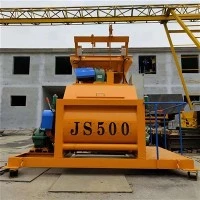


Precast Concrete Hollow Core Slab Making Machine
The Hollow Core Slab Machine: What Matters After the Sale

You're not buying a machine. You're buying a production line. The difference between a profitable precast yard and a problematic one often comes down to what happens afterthe extrusion is done. We've learned this running our own yard in Jining and supporting plants from Vietnam to Saudi Arabia.
Most brochures talk about vibration motors and production speed. Let me tell you about the Monday morning we lost because a core pipe seized in the mold. The concrete had hardened overnight-a small mix design change the previous Friday was the culprit. It took six hours, two gas torches, and a lot of frustration to fix. That's the day we redesigned our core pipe mounting system.
The Three Things That Will Cost You Money (And How We've Fixed Them)
| Floor Slab Forming Equipment Technical Specifications |
|
Parameter Category |
Specification Item |
Parameter / Configuration |
|---|---|---|
|
Performance |
Forming Speed |
1.1 meters/minute |
|
Main Drive Motor Power |
5.5 kW |
|
|
Vibrator Type |
2.0 kW, Specialized for floor slabs |
|
|
Reducer Model |
Type 250, Horizontal |
|
|
Mould/Moulding Shoe Life (Alloy) |
100,000 - 300,000 meters (depends on sand/aggregate material) |
|
|
Profile & Dimensions |
Side Plate Profile Types |
Arc Type, Flanging Type, Rectangular Type, Isosceles Trapezoid Type |
|
Bottom Width of Slab |
49 cm (National Standard, customizable) |
|
|
Top Width of Slab |
47 cm (National Standard, customizable) |
|
|
Aperture (Hole Diameter) |
7.6 cm (National Standard, customizable) |
|
|
Number of Apertures (Holes) |
4 |
|
|
Max. Slab Length |
4.2 m (National Standard), 4.5 m (Commonly Used) |
|
|
Slab Thickness |
12 cm (National Standard), 11.5 - 11.8 cm (Commonly Used) |
|
|
Reinforcement Grooves |
Number of Bottom Reinforcement Grooves |
12 - 15 grooves |
|
Upper Reinforcement Grooves |
Customized (Usually 2 grooves or none) |
1. The Wear That Stops Production
The forming box isn't a wear part; it's thewear part. Aggregate grinds against it like sandpaper. We stopped using standard hardened steel plates. Now, we fit replaceable wear shoes made from a proprietary alloy blend at all high-friction points. They're bolted, not welded. When they wear down-after about 40,000 linear meters-your crew can unbolt and replace them in under an hour. No welding, no waiting for a technician. We ship two spare sets with every machine. The cost is built in, but the downtime isn't.
2. The Vibration That Doesn't Reach the Corners
Uniform density is everything. A weak corner means a failed load test. Many machines use two large vibrators. We use a modular vibration array-smaller, high-frequency units spaced along the width of the mold. Each has its own quick-disconnect power coupling. The result is even compaction from edge to edge. If one fails (which happens about once every two years), you disconnect it, slide in a spare from the shelf (we provide one), and are running again in 20 minutes. Production doesn't stop.
3. The "Clean-Out" That Kills Productivity
At the end of a shift, concrete sets in the machine. The standard method is water and a hammer. Our mold design includes integrated high-pressure water jets at key points. The operator hits a button on the control panel, the system flushes the critical channels with 80-bar pressure, and 90% of the cleanup is done in 3 minutes. The other 10% is a quick brush-down. This single feature saves an hour of labor per shift. For a two-shift operation, that's 500+ hours a year. You're paying operators to make slabs, not clean steel.

A Real Breakdown: Output vs. Reality
Let's talk about the "150 meters per day" claim you often see. That's a theoretical maximum with perfect conditions. Here's a real-world breakdown from a plant in Thailand using our JWT-1200 model:
The Claim: 150 meters/day (8-hour shift)
Their Reality (First Month): 85 meters/day
-20m: Downtime adjusting mix design (their sand was too wet).
-15m: Learning curve for the crew on setup and cleanout.
-30m: Waiting for the batching plant to keep up.
Their Reality (Month 6): 130 meters/day
They'd dialed in their local mix (using a 6mm aggregate crush instead of 10mm).
The crew had a smooth rhythm.
They added a larger concrete hopper to buffer batching plant delays.
The machine was capable of 150m. The systemaround it took time to catch up. When we consult, we focus on your entire system-aggregate pile, batching, logistics-not just the machine specs.
The "Pre-Ship" Checklist We Run For You
Before a machine leaves our factory for yours, it doesn't just get a test run. It gets a production simulation based on your information.
We Ask for Your Materials: You send us 50kg of your local sand and aggregate. We run it through our test mixer and a small-scale mold to check flow, setting time, and wear characteristics. We'll send back a recommended mix design.
We Test Your Power: Tell us your local voltage and phase stability. We run the machine's main drive and vibrators at that spec for a 48-hour endurance test. If your power is "dirty," we know to uprate the transformers or add filters beforeshipping.
We Make a "Day One" Video: We don't send a generic promo video. We film a 30-minute walkthrough of yourmachine on our factory floor. Our lead engineer points to the specific grease points, the location of the spare wear shoes, and the clean-out valves, saying, "This is your machine. Here's how you start it on Monday."

The Question You Need to Answer Before You Buy
The most important question isn't about the machine. It's about your market.
"Are you selling slabs based on lowest price, or are you selling them based on certified, consistent quality that commands a premium?"
If it's the former, a simpler, cheaper machine might work. You'll compete on razor-thin margins and absorb the higher labor costs.
If it's the latter, this machine is your tool. Its consistency lets you certify your slabs to EN 1168 or ASTM C90 standards. You're not just selling concrete; you're selling structural reliability. That's how you move from being a supplier to being a partner for large construction firms.
What to Do Next
If this makes sense, contact us with your most immediate challenge. Don't write "info request."
Write something like this:
"We're bidding on a 15,000-sqm warehouse project. The spec calls for 200mm hollow core slabs, EN 1168 compliant. Our current manual method can't guarantee the consistency. We have a 60-meter casting bed. Can your system meet this spec, and what would we need to change in our yard to make it work?"
That email gets routed directly to our technical director. You'll get a call, a preliminary layout, and a list of the three biggest risks we see in your transition to automated production. We'll also connect you with a plant manager in a similar climate who made the switch two years ago.
You're making a capital decision that will define your business for the next decade. Let's make sure you have all the data, not just the brochure.
Hot Tags: precast concrete hollow core slab making machine, China precast concrete hollow core slab making machine manufacturers, factory, concrete slab cutting machine, slab polishing machine, slab making machine, Core Slab Machine, stone slab cutting machine, electric slab cutter
You Might Also Like


Send Inquiry