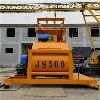

A wall panel machine is a type of industrial equipment used to make wall panels in a fast and organized way. These panels are used in building houses, offices, factories, and other structures. Instead of building walls piece by piece on-site, companies can produce ready-made panels in a factory and then install them later. This saves time, labor, and cost.
To understand how a wall panel machine works, it helps to first imagine a simple production line. The machine is not just one single device. It is usually a combination of different parts working together in a sequence. Each part has its own job, and all steps are connected like a flow.
The process usually starts with raw materials. Most wall panels are made from materials like cement, gypsum, foam, or lightweight concrete. These materials are prepared and mixed first. The mixture needs to be smooth and balanced so that the final panel is strong but not too heavy.
After the material is ready, it is sent into the forming section of the machine. This is where the shape of the wall panel is created. The machine has molds or flat platforms that define the size and thickness of the panel. The wet mixture is poured or injected into these molds. At this stage, the material is still soft, like thick paste.

Next comes the pressing or shaping process. Some wall panel machines use hydraulic pressure to compress the material. This step is important because it removes air bubbles inside the panel and makes the structure more solid. If air stays inside, the panel could become weak or crack easily later.
In many modern machines, there is also a reinforcing step. Steel mesh or fiber materials may be added into the wet panel. This works like bones in the human body. It helps the panel stay strong when it is moved or installed. Without reinforcement, the panel might break under pressure.
After shaping and reinforcing, the panel needs to be cured. Curing means letting the material harden properly. Depending on the type of material, this can take hours or even days. Some factories use special curing rooms with controlled temperature and humidity. This helps the panels dry evenly and reach full strength faster.
Once the panel is hardened, it goes to the cutting and finishing stage. The machine can trim the edges to make sure every panel has the same size. Workers or automated systems may also smooth the surface, add texture, or prepare holes for wiring and pipes if needed.
Finally, the finished wall panels are stacked and stored. They are then transported to construction sites where builders install them like large building blocks.
One of the key advantages of a wall panel machine is efficiency. In traditional construction, workers build walls step by step on site, which takes a lot of time and depends heavily on weather conditions. With wall panel machines, most of the work is done in a factory environment, so the quality is more stable and the speed is much faster.
Another advantage is consistency. Because the machine controls the size, shape, and density of each panel, the final products are usually very uniform. This makes construction easier and reduces waste.
In simple terms, a wall panel machine works like a "wall factory line." Raw materials go in one end, and finished wall sections come out the other end. It combines mixing, shaping, pressing, strengthening, and curing into one continuous process.
As construction technology develops, wall panel machines are becoming more advanced and automated. Some factories even use computer control systems to manage the entire production line with very little manual work. This makes modern building construction faster, cleaner, and more efficient than ever before.