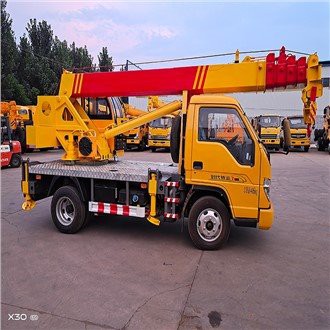
Hey there! As a supplier of spider cranes, I often get asked about the working radius of these nifty machines. Let's dive right in and break it down so you can have a better understanding of what these bad boys are capable of.
First off, what exactly is a spider crane? Well, it's a compact and highly maneuverable crane that gets its name from its long, extendable legs that resemble a spider's. These cranes are designed to work in tight spaces where larger cranes can't go, making them a popular choice for a variety of industries, including construction, maintenance, and event setup.
Now, let's talk about the working radius. The working radius of a spider crane refers to the maximum horizontal distance from the center of the crane's rotation to the point where it can safely lift and move a load. It's an important factor to consider when choosing a crane for a particular job, as it determines the crane's reach and the area it can cover.
There are several factors that can affect the working radius of a spider crane. One of the most significant factors is the length of the crane's boom. The longer the boom, the greater the working radius. However, it's important to note that as the boom extends, the crane's lifting capacity decreases. This means that you need to find the right balance between reach and lifting power to ensure that the crane can handle the load safely.
Another factor that can affect the working radius is the angle of the boom. The working radius is typically measured when the boom is at a specific angle, usually 0 degrees (horizontal) or 90 degrees (vertical). As the angle of the boom changes, the working radius can also change. For example, when the boom is at a steeper angle, the working radius may be reduced, but the crane may be able to lift a heavier load.
The weight of the load also plays a role in determining the working radius. As the load gets heavier, the crane's capacity to lift and move the load at a greater distance decreases. This means that you need to consider the weight of the load when choosing a crane and calculating the working radius.
The type of terrain and the stability of the ground can also affect the working radius. Spider cranes are designed to be more stable than traditional cranes, thanks to their long, extendable legs. However, if the ground is uneven or unstable, the crane's stability may be compromised, which can limit its working radius.
So, how do you calculate the working radius of a spider crane? Well, it's not as complicated as it may seem. Most spider cranes come with a load chart that shows the maximum working radius for different load weights and boom angles. You can use this chart to determine the working radius for your specific job.
Here's an example. Let's say you're using a spider crane with a 10-meter boom and you need to lift a 500-kilogram load. According to the load chart, the maximum working radius for a 500-kilogram load with a 10-meter boom at a 0-degree angle is 6 meters. This means that you can safely lift and move the load within a 6-meter radius from the center of the crane's rotation.
It's important to note that the working radius is just one of the factors to consider when choosing a spider crane. You also need to consider the crane's lifting capacity, the height of the lift, the type of load, and the working environment. By taking these factors into account, you can choose the right crane for your job and ensure that it operates safely and efficiently.


At our company, we offer a wide range of spider cranes with different working radii and lifting capacities to meet the needs of our customers. Whether you're working on a small construction project or a large event setup, we have the right crane for you.
In addition to spider cranes, we also offer other types of cranes, such as 10 Tons Truck Crane, Small Truck Crane, and Truck Mounted Crane. These cranes are suitable for different applications and can provide the lifting power and reach you need to get the job done.
If you're in the market for a spider crane or any other type of crane, we'd love to hear from you. Our team of experts can help you choose the right crane for your job and provide you with all the information you need to make an informed decision.
So, what are you waiting for? Contact us today to discuss your lifting needs and let's get to work!
References:
- Crane Industry Manual: Load Charts and Calculations
- Spider Crane Manufacturer's Specifications and Guidelines