Hey there! As a supplier of Hydro Cranes, I've been getting a lot of questions about the signal requirements for operating these bad boys. So, I thought I'd put together this blog post to break it all down for you.
Understanding the Basics of Hydro Crane Signals
First off, let's talk about why signals are so important when it comes to operating a Hydro Crane. You see, a Hydro Crane is a powerful piece of machinery, and it's crucial to have clear communication between the operator and the people on the ground. Signals help ensure that everyone is on the same page, which in turn helps prevent accidents and keep the job site safe.
There are two main types of signals used with Hydro Cranes: visual and auditory. Visual signals are typically hand signals, which are easy to see and understand, even from a distance. Auditory signals, on the other hand, are sounds like horns or whistles, which can be heard over the noise of the crane and other equipment on the job site.
Visual Signals
Visual signals are the most common way to communicate with a Hydro Crane operator. They're simple, easy to learn, and can be used in a variety of situations. Here are some of the most important visual signals you need to know:
- Stop: This signal is used to tell the operator to stop the crane immediately. To give this signal, extend your arm straight up with your palm facing forward.
- Hoist: This signal is used to tell the operator to lift the load. To give this signal, raise your arm with your palm facing up and make a lifting motion.
- Lower: This signal is used to tell the operator to lower the load. To give this signal, lower your arm with your palm facing down and make a lowering motion.
- Swing: This signal is used to tell the operator to swing the crane in a specific direction. To give this signal, point in the direction you want the crane to swing.
- Telescope: This signal is used to tell the operator to extend or retract the crane's boom. To give this signal, make a circular motion with your hand.
It's important to note that these signals are just a general guide, and different companies or job sites may have their own specific signals. Make sure you familiarize yourself with the signals used on your job site before you start operating the crane.
Auditory Signals
Auditory signals are used to supplement visual signals and can be especially useful in situations where visibility is poor or when the operator can't see the person giving the signals. Here are some of the most common auditory signals used with Hydro Cranes:
- One blast: This signal is used to indicate that the crane is about to start moving.
- Two blasts: This signal is used to indicate that the crane is about to stop moving.
- Three blasts: This signal is used to indicate an emergency situation.
Again, these signals may vary depending on the company or job site, so make sure you know the specific signals used on your site.
Signal Requirements for Different Types of Hydro Cranes
Now that you understand the basics of Hydro Crane signals, let's talk about the specific signal requirements for different types of Hydro Cranes.
Telescopic Truck Mounted Crane
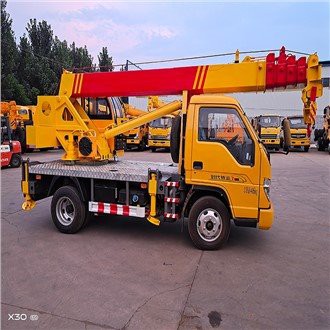
A Telescopic Truck Mounted Crane is a type of crane that is mounted on a truck and has a telescopic boom. These cranes are often used for construction projects, such as building bridges or skyscrapers.
When operating a Telescopic Truck Mounted Crane, it's important to use clear and concise signals to communicate with the operator. The signals should be easy to see and understand, even from a distance. In addition, the operator should be able to hear the auditory signals over the noise of the truck and the crane.


Mini Lift Crane Truck
A Mini Lift Crane Truck is a smaller type of crane that is often used for light-duty lifting tasks, such as moving small equipment or materials. These cranes are typically mounted on a truck and have a limited lifting capacity.
When operating a Mini Lift Crane Truck, the signal requirements are similar to those for a Telescopic Truck Mounted Crane. However, because these cranes are smaller and have a lower lifting capacity, the signals may be less complex.
Diesel Three-wheel Truck Crane
A Diesel Three-wheel Truck Crane is a type of crane that is powered by a diesel engine and has three wheels. These cranes are often used for construction projects in tight spaces, such as urban areas.
When operating a Diesel Three-wheel Truck Crane, it's important to use signals that are visible and audible in the limited space. The signals should be clear and concise, and the operator should be able to see and hear them from the cab of the crane.
Importance of Training and Certification
Operating a Hydro Crane is a serious responsibility, and it's important to have the proper training and certification before you start. In most cases, you'll need to complete a training program that covers the operation of the crane, as well as the signal requirements.
During the training program, you'll learn how to use the signals correctly and how to communicate effectively with the operator. You'll also learn about the safety procedures and regulations that apply to Hydro Crane operation.
Once you've completed the training program, you'll need to pass a certification exam to demonstrate your knowledge and skills. This certification is typically valid for a certain period of time, and you'll need to renew it periodically to ensure that you're up-to-date on the latest safety procedures and regulations.
Conclusion
In conclusion, the signal requirements for operating a Hydro Crane are an important part of ensuring the safety of everyone on the job site. By using clear and concise signals, you can communicate effectively with the operator and prevent accidents from happening.
If you're in the market for a Hydro Crane, I encourage you to reach out to us. We're a leading supplier of Hydro Cranes, and we can help you find the right crane for your needs. Whether you're looking for a Telescopic Truck Mounted Crane, a Mini Lift Crane Truck, or a Diesel Three-wheel Truck Crane, we've got you covered.
So, what are you waiting for? Contact us today to learn more about our Hydro Cranes and how we can help you with your next project.
References
- Occupational Safety and Health Administration (OSHA). (n.d.). Crane and Derrick Safety. Retrieved from [OSHA Website]
- American National Standards Institute (ANSI). (n.d.). Safety Standard for Cranes, Derricks, Hoists, Elevators, and Conveyors. Retrieved from [ANSI Website]