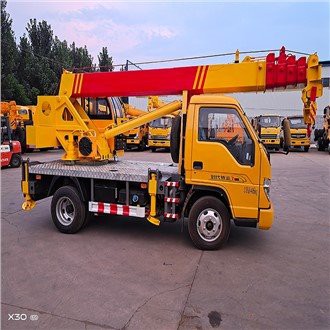
When it comes to the world of heavy - duty construction and industrial operations, truck cranes are indispensable workhorses. As a well - established truck crane supplier, I've had the privilege of working closely with these remarkable machines and understand the importance of their weight and dimensions. In this blog post, I'll delve into the factors that affect the weight and dimensions of truck cranes and how these specifications impact their performance and applications.


Understanding the Basics of Truck Crane Weight
The weight of a truck crane is a crucial factor that determines its stability, mobility, and load - bearing capacity. A truck crane's weight can be broken down into two main components: the self - weight of the crane itself and the weight of the load it can carry.
The self - weight of a truck crane includes the chassis, superstructure, boom, counterweights, and all the mechanical and electrical components. This self - weight is essential for providing stability when the crane is lifting heavy loads. For instance, larger cranes with longer booms and higher lifting capacities generally have greater self - weights to counterbalance the forces exerted during lifting operations.
The load - carrying capacity of a truck crane is another significant aspect of its weight. It refers to the maximum weight that the crane can safely lift at a given radius. Different models of truck cranes have varying load - carrying capacities, which can range from a few tons to over a hundred tons. For example, a 10 Tons Truck Crane is designed to handle relatively smaller loads, making it suitable for light - to - medium - duty construction projects such as building small structures or performing maintenance work. On the other hand, a 25 Ton Truck Crane can lift heavier loads, which is ideal for more substantial construction sites, like high - rise building projects or large - scale infrastructure development.
Factors Affecting Truck Crane Weight
Several factors influence the weight of a truck crane. One of the primary factors is the crane's design and construction materials. Modern truck cranes are often built using high - strength steel and advanced alloys to reduce weight while maintaining structural integrity. However, larger cranes with more complex designs and additional features may still be relatively heavy.
The length and type of the boom also play a role in determining the weight. Longer booms generally add more weight to the crane, as they require stronger materials to support the load at greater distances. Telescopic booms, which can extend and retract, are commonly used in truck cranes. They offer flexibility in reaching different heights and distances but can contribute to increased weight compared to fixed - length booms.
Counterweights are another important factor. These are additional weights attached to the rear of the crane to counterbalance the load being lifted. The amount of counterweight required depends on the lifting capacity and the radius of the lift. More substantial counterweights are needed for larger loads and longer reach operations, which in turn increase the overall weight of the crane.
The Significance of Truck Crane Dimensions
The dimensions of a truck crane are equally important as its weight. They determine the crane's maneuverability, accessibility, and the space required for operation. The key dimensions of a truck crane include its length, width, height, and the turning radius.
The length of a truck crane is mainly determined by the length of the chassis and the boom. A longer crane may have a greater reach but can be more challenging to maneuver in tight spaces. For example, in urban construction sites with limited space, a shorter - length truck crane may be more suitable to navigate through narrow streets and work in confined areas.
The width of the crane affects its ability to pass through doorways, gates, and other narrow passages. Standard truck cranes typically have a width that complies with road transportation regulations. However, some specialized cranes may have wider dimensions, which require special permits for transportation.
The height of the crane is crucial, especially when working in areas with height restrictions, such as under bridges or in indoor facilities. Low - profile truck cranes are available for such applications, allowing them to operate in spaces with limited vertical clearance.
The turning radius is an important dimension for maneuverability. A smaller turning radius enables the crane to make sharp turns, which is essential for working in congested construction sites. Some truck cranes are designed with features like all - wheel steering to reduce the turning radius and improve maneuverability.
Different Types of Truck Cranes and Their Dimensions
There are various types of truck cranes, each with its own unique dimensions. For example, a Tractor Platform Crane combines the mobility of a tractor with the lifting capabilities of a crane. These cranes usually have a more compact design, making them suitable for smaller construction projects and agricultural applications. They often have a relatively shorter length and width, allowing them to operate in tight spaces.
All - terrain truck cranes are designed to operate on various types of terrain, including rough and uneven ground. They typically have larger dimensions and higher ground clearance to ensure stability and mobility. These cranes are commonly used in large - scale construction projects in remote areas where access roads may be poor.
Impact of Weight and Dimensions on Performance
The weight and dimensions of a truck crane have a direct impact on its performance. A heavier crane generally offers greater stability, which is essential for lifting heavy loads. However, excessive weight can also reduce the crane's mobility and increase fuel consumption. On the other hand, a lighter - weight crane may be more maneuverable but may have limitations in terms of lifting capacity.
The dimensions of the crane affect its ability to access different job sites. If a crane is too large to fit through a narrow entrance or has a large turning radius, it may not be suitable for certain projects. Moreover, the height of the crane can limit its use in areas with height restrictions.
Considerations for Selecting the Right Truck Crane
When choosing a truck crane, it's essential to consider both the weight and dimensions based on the specific requirements of the project. For projects in urban areas with limited space, a compact and lightweight crane with a small turning radius may be the best choice. In contrast, large - scale construction projects on open terrain may require a heavier and larger crane with a high lifting capacity.
It's also important to consider the transportation requirements. If the crane needs to be transported over long distances, its weight and dimensions should comply with road regulations. Additionally, the availability of counterweights and their ease of installation should be taken into account, as they can affect the overall setup time and cost.
Conclusion
In conclusion, the weight and dimensions of a truck crane are critical factors that influence its performance, mobility, and suitability for different applications. As a truck crane supplier, I understand the importance of providing our customers with accurate information about these specifications to help them make informed decisions. Whether you're working on a small - scale construction project or a large - scale infrastructure development, choosing the right truck crane with the appropriate weight and dimensions is crucial for the success of your operation.
If you're in the market for a truck crane and need more information about the weight, dimensions, or any other aspects of our products, please don't hesitate to contact us. We're here to assist you in finding the perfect crane solution for your specific needs. Our team of experts is ready to answer your questions and guide you through the purchasing process. Let's work together to ensure your project runs smoothly and efficiently with the right truck crane.
References
- Construction Equipment Handbook. McGraw - Hill Professional.
- Crane Safety Manual. Occupational Safety and Health Administration (OSHA).
- Truck Crane Manufacturer's Technical Specifications.