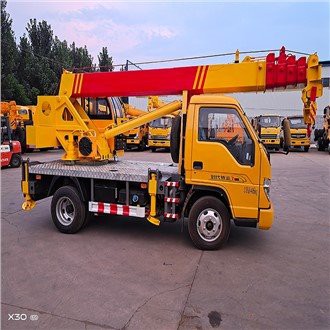
Training operators for a small truck crane is a crucial task that requires a comprehensive approach. As a small truck crane supplier, I understand the significance of well - trained operators in ensuring safety, efficiency, and the longevity of the equipment. In this blog, I will share some insights on how to train operators for a small truck crane effectively.
Understanding the Basics of Small Truck Cranes
Before starting the training, it is essential for operators to have a solid understanding of the small truck crane they will be operating. Small truck cranes come in various types, such as the Mini Size Truck Crane, Mini Caterpillar Crane, and Diesel Three - wheel Truck Crane. Each type has its own unique features, capabilities, and limitations.
The training should begin with an in - depth introduction to the crane's components. Operators need to know about the boom, jib, hoist, outriggers, and control systems. They should understand how these parts work together to perform lifting operations. For example, the boom is responsible for extending the reach of the crane, while the hoist is used to lift and lower the load. The outriggers provide stability during lifting, and the control systems allow the operator to manipulate all these functions.
Theoretical Training
Theoretical training forms the foundation of crane operator training. It covers a wide range of topics, including safety regulations, load capacity calculations, and operating procedures.
Safety Regulations
Safety is the top priority when operating a small truck crane. Operators must be well - versed in local and international safety regulations. This includes understanding the importance of wearing personal protective equipment (PPE), such as hard hats, safety glasses, and steel - toed boots. They should also know about the safety features of the crane, such as overload protection devices and emergency stop buttons.
In addition, operators need to learn about the proper setup and positioning of the crane. For instance, the crane should be set up on a firm and level surface, and the outriggers should be fully extended and properly secured. They should also be aware of the clearance requirements around the crane to avoid collisions with other objects or structures.
Load Capacity Calculations
Accurate load capacity calculations are essential to prevent overloading the crane, which can lead to serious accidents. Operators should learn how to read the load chart provided by the crane manufacturer. The load chart takes into account factors such as the boom length, boom angle, and the distance from the crane to the load. By referring to the load chart, operators can determine the maximum weight that the crane can safely lift under different conditions.
Operating Procedures
Theoretical training should also cover the correct operating procedures for the small truck crane. This includes starting and stopping the crane, moving the boom and jib, and operating the hoist. Operators should learn how to use the control levers and switches correctly to ensure smooth and precise movements. They should also be taught about the proper sequence of operations, such as extending the outriggers before lifting a load.
Practical Training
Practical training is where operators get hands - on experience with the small truck crane. It allows them to apply the theoretical knowledge they have learned in a real - world setting.


Simulator Training
Simulator training can be a valuable part of the practical training process. Crane simulators provide a safe and controlled environment for operators to practice their skills. They can simulate different lifting scenarios, such as lifting heavy loads, working in confined spaces, and dealing with adverse weather conditions. Simulator training helps operators build confidence and improve their reaction times without the risk of damaging the actual crane or causing an accident.
On - Site Training
On - site training is the most important part of the practical training. Operators should be supervised by an experienced trainer while operating the small truck crane. The trainer can provide immediate feedback and guidance, helping the operator correct any mistakes and improve their technique.
During on - site training, operators should practice a variety of lifting tasks, such as lifting and moving loads of different weights and sizes, and positioning the load accurately. They should also learn how to handle unexpected situations, such as equipment malfunctions or changes in the weather.
Continuous Training and Evaluation
Training does not end after the initial certification. Continuous training is necessary to keep operators up - to - date with the latest safety regulations, crane technology, and best practices. Regular refresher courses can reinforce the operator's knowledge and skills and help prevent complacency.
Evaluation is also an important part of the training process. Operators should be regularly evaluated to ensure that they are performing their duties safely and efficiently. This can include written tests, practical assessments, and on - the - job observations. Based on the evaluation results, additional training can be provided if necessary.
Importance of Training for Small Truck Crane Operators
Well - trained operators offer several benefits to both the crane owner and the construction project. Firstly, safety is significantly improved. Trained operators are less likely to cause accidents, which can save lives, prevent property damage, and avoid costly legal issues.
Secondly, efficiency is enhanced. Trained operators can perform lifting operations more quickly and accurately, reducing downtime and increasing productivity. They are also better able to handle complex lifting tasks, which can lead to better project outcomes.
Finally, proper training can extend the lifespan of the small truck crane. Operators who know how to operate the crane correctly are less likely to cause unnecessary wear and tear on the equipment, reducing maintenance costs and increasing the overall reliability of the crane.
Conclusion
Training operators for a small truck crane is a multi - faceted process that requires a combination of theoretical knowledge and practical experience. As a small truck crane supplier, I am committed to providing support and resources to ensure that operators are well - trained. If you are interested in purchasing a small truck crane or need more information about our training programs, please feel free to contact us for further discussion and procurement negotiation.
References
- OSHA (Occupational Safety and Health Administration). Crane safety regulations and guidelines.
- Crane manufacturers' manuals and training materials for small truck cranes.
- Industry best practices and standards for crane operator training.