Hey there, folks! As an offshore crane supplier, I've seen firsthand how crucial it is to have an optimized layout for offshore cranes on platforms. Today, I'm gonna share some tips and insights on how you can achieve just that.
Understanding the Basics
First things first, let's talk about what we're dealing with. An offshore crane is a heavy - duty lifting equipment used in offshore platforms like oil rigs, offshore wind farms, and other marine structures. The layout of these cranes on the platform can significantly impact the platform's efficiency, safety, and overall performance.
There are a few key factors that we need to consider before starting to plan the layout. The type of work the crane will be doing is super important. For example, if it's for loading and unloading cargo ships, we need to ensure easy access to the ship's deck. If it's for installing equipment on the platform itself, we have to think about the movement paths on the platform.
Another factor is the size and weight of the loads. Heavy - duty cranes handling large loads require more space and support. Also, the environment plays a huge role. Offshore platforms are exposed to harsh weather conditions like strong winds, waves, and saltwater corrosion. So, we need to place the crane in a way that it can withstand these elements.
Site Assessment
Before we even start thinking about where to put the crane, we've gotta do a thorough site assessment. We need to know the exact dimensions of the platform, including the available deck space, the height restrictions, and any existing structures that could interfere with the crane's operation.
It's also essential to study the traffic flow on the platform. Workers, vehicles, and other equipment are constantly moving around. We don't want the crane to block these paths or create a safety hazard. For instance, if there's a regular flow of trucks carrying supplies to a certain area of the platform, the crane should be placed in a way that doesn't disrupt this flow.
Crane Selection
At our company, we offer a wide range of Ship Crane. The type of crane you choose has a direct impact on the layout. There are different kinds of offshore cranes, such as knuckle - boom cranes, telescopic cranes, and lattice - boom cranes.
Knuckle - boom cranes are great for tight spaces as they can fold up and take up less room when not in use. They're also very versatile in terms of their reach and angle of operation. Telescopic cranes, on the other hand, are known for their long reach and are ideal for reaching far - out areas like ships' holds. Lattice - boom cranes are extremely strong and can handle very heavy loads, but they usually require more space for setup.
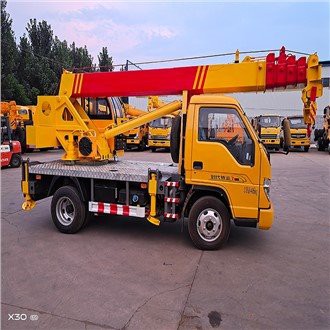
If your platform has limited space, a Diesel Tractor Platform Crane might be a good option. It combines the mobility of a tractor with the lifting power of a crane, allowing it to move around the platform easily.
Layout Design
Once we've selected the right crane, it's time to start designing the layout. The center of gravity of the crane is a critical consideration. The crane should be placed in a way that its center of gravity is within the stable area of the platform. This helps prevent the platform from tipping over, especially when the crane is lifting heavy loads.
We also need to think about the radius of the crane's operation. The crane should be positioned so that it can cover the areas where it needs to work without having to re - position too often. This not only saves time but also reduces wear and tear on the crane.
For example, if we're working on an offshore wind farm, the crane should be able to reach all the turbine components for installation and maintenance. We might place it in a central location on the platform to maximize its coverage.
Safety Considerations
Safety is always our top priority. The crane layout should include clear safety zones around the crane. These zones are areas where workers are not allowed to enter when the crane is in operation. We need to mark these zones clearly with signs and barriers.
The crane's controls should be easily accessible and visible from a safe location. Operators should be able to see the load and the surrounding area clearly. In case of an emergency, there should be a clear path for the operator to evacuate the crane.
We also need to consider the impact of the crane on the platform's stability during extreme weather conditions. The crane should be secured properly to withstand high winds and waves.
Maintenance Access
Don't forget about maintenance! The crane needs to be easily accessible for regular maintenance and repairs. There should be enough space around the crane for technicians to work on it. This includes access to the engine, hydraulic systems, and other critical components.
We should also plan for the storage of spare parts near the crane. This ensures that any necessary repairs can be carried out quickly, minimizing downtime.


Cost - Benefit Analysis
Optimizing the crane layout also involves a cost - benefit analysis. We need to balance the cost of installing and operating the crane with the benefits it brings. For example, if we invest in a more expensive but highly efficient crane, it might save us money in the long run due to reduced downtime and increased productivity.
On the other hand, if we choose a cheaper crane that doesn't meet our requirements, it could lead to more frequent breakdowns and higher maintenance costs.
Conclusion
So, there you have it! Optimizing the layout of an offshore crane on a platform is a complex but achievable task. By considering factors like site assessment, crane selection, layout design, safety, maintenance access, and cost - benefit analysis, we can create a layout that maximizes the efficiency and safety of the crane and the platform.
If you're in the market for an Offshore Crane or need help with crane layout optimization, don't hesitate to reach out. We're here to provide you with the best solutions and support for your offshore projects.
References
- "Offshore Crane Handbook" - A comprehensive guide on offshore cranes and their operation.
- Industry standards and regulations related to offshore crane installation and operation.