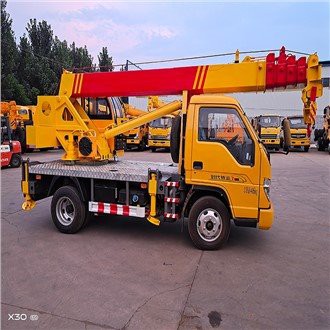
How does the Mini Caterpillar Crane's lifting speed vary with load?
As a supplier of Mini Caterpillar Cranes, I've witnessed firsthand the critical role these machines play in various industries, from construction to manufacturing. One of the most frequently asked questions by our customers is how the lifting speed of a Mini Caterpillar Crane changes with different loads. In this blog post, I'll delve into the science behind this relationship and provide insights based on industry knowledge and real-world experience.
Understanding the Basics of Mini Caterpillar Cranes
Before we dive into the relationship between lifting speed and load, let's briefly understand what a Mini Caterpillar Crane is. A Mini Caterpillar Crane is a compact yet powerful lifting machine designed for maneuverability in tight spaces. Its caterpillar tracks provide stability and traction on various terrains, making it a versatile choice for a wide range of applications. Unlike larger cranes, mini caterpillar cranes are known for their agility and ability to operate in confined areas, such as small construction sites or indoor facilities.
The lifting speed of a crane is a crucial factor that can significantly impact the efficiency of a project. Faster lifting speeds can reduce the overall time required to complete a task, leading to increased productivity and cost savings. However, the lifting speed is not a fixed value and is influenced by several factors, with the load being one of the most significant.
The Relationship between Lifting Speed and Load
In general, the lifting speed of a Mini Caterpillar Crane decreases as the load increases. This relationship is governed by the principles of physics and the design limitations of the crane. When a crane is lifting a load, it has to overcome the force of gravity acting on the load. The greater the load, the more force is required to lift it, which in turn affects the speed at which the load can be lifted.
From a mechanical perspective, the crane's motor and hydraulic system play a crucial role in determining the lifting speed. The motor provides the power to drive the lifting mechanism, while the hydraulic system is responsible for transmitting the force from the motor to the load. When a heavy load is applied, the motor has to work harder to generate enough torque to lift the load, and the hydraulic system has to handle a higher pressure. As a result, the speed of the lifting mechanism slows down to ensure safe and stable operation.
Let's take a closer look at how this relationship is manifested in real-world scenarios. Suppose you have a Mini Caterpillar Crane with a maximum lifting capacity of 3 tons. When lifting a light load of, say, 500 kilograms, the crane can operate at a relatively high speed. The motor and hydraulic system are not under significant stress, and the crane can quickly raise the load to the desired height. However, as you increase the load to 2 tons or more, you'll notice a significant decrease in the lifting speed. The crane has to work harder to lift the heavier load, and the lifting process becomes slower and more deliberate.
Factors Affecting the Relationship
While the load is the primary factor affecting the lifting speed of a Mini Caterpillar Crane, there are several other factors that can also influence this relationship. These factors include the crane's design, the condition of the lifting equipment, and the operating environment.
- Crane Design: Different models of Mini Caterpillar Cranes may have different lifting speed capabilities. Some cranes are designed to prioritize lifting capacity over speed, while others are optimized for faster operation. The design of the lifting mechanism, such as the type of hoist and the gear ratio, can also affect the lifting speed. For example, a crane with a high-speed hoist can lift lighter loads at a faster rate compared to a crane with a standard hoist.
- Equipment Condition: The condition of the lifting equipment, including the cables, pulleys, and hydraulic hoses, can have a significant impact on the lifting speed. Worn-out or damaged components can increase friction and resistance, which can slow down the lifting process. Regular maintenance and inspection of the equipment are essential to ensure optimal performance and to prevent any potential safety hazards.
- Operating Environment: The operating environment can also affect the lifting speed of a Mini Caterpillar Crane. Factors such as the terrain, weather conditions, and the availability of space can all play a role. For example, operating on a rough or uneven terrain can require the crane to operate at a slower speed to maintain stability. Similarly, adverse weather conditions such as strong winds or heavy rain can also limit the lifting speed for safety reasons.
Importance of Understanding the Relationship
Understanding how the lifting speed of a Mini Caterpillar Crane varies with load is crucial for several reasons. Firstly, it helps in project planning and scheduling. By knowing the relationship between load and lifting speed, project managers can accurately estimate the time required to complete a lifting task and allocate resources accordingly. This can help in avoiding delays and ensuring that the project stays on track.


Secondly, it ensures safe operation. Operating a crane at a speed that is not appropriate for the load can pose a significant safety risk. Overloading the crane or trying to lift a heavy load at a high speed can lead to mechanical failures, instability, and even accidents. By understanding the relationship between load and lifting speed, operators can operate the crane within its safe limits and minimize the risk of accidents.
Finally, it helps in cost management. By optimizing the lifting speed based on the load, companies can reduce the overall energy consumption and wear and tear on the equipment. This can lead to cost savings in the long run, as well as increased equipment lifespan.
Conclusion and Call to Action
In conclusion, the lifting speed of a Mini Caterpillar Crane varies inversely with the load. As the load increases, the lifting speed decreases to ensure safe and stable operation. However, this relationship is also influenced by other factors such as the crane's design, equipment condition, and operating environment.
If you're in the market for a Mini Caterpillar Crane or need more information about its lifting capabilities, we're here to help. Our team of experts can provide you with detailed information about our products and help you choose the right crane for your specific needs. We also offer a wide range of other cranes, including 8 Tons Truck Crane and Diesel Three - wheeled Crane.
Contact us today to start the procurement discussion and take your project to the next level.
References
- Engineering Mechanics: Principles of Mechanics by S. Hibbeler
- Crane Operator's Manual: A Guide to Safe and Efficient Operation