Can a Mini Crawler Crane be used for archaeological excavation?


Hey there! I'm a supplier of mini crawler cranes, and I've been getting a lot of questions lately about whether these little powerhouses can be used in archaeological excavations. Well, let's dive right in and explore this topic.
First off, what exactly is a mini crawler crane? It's a compact, highly maneuverable crane that runs on crawler tracks. These tracks give it excellent stability and the ability to move across various terrains, including uneven ground. Mini crawler cranes are known for their relatively small size, which allows them to access tight spaces where larger cranes can't go.
Now, let's think about archaeological excavations. These are delicate operations that require precision and care. The goal is to uncover and preserve historical artifacts and structures without causing any damage. So, can a mini crawler crane fit into this picture?
One of the key advantages of a mini crawler crane in an archaeological setting is its maneuverability. Archaeological sites can be full of obstacles, like old walls, trenches, and other debris. A mini crawler crane can easily navigate around these obstacles thanks to its small footprint and flexible movement. It can reach areas that might be difficult or impossible for larger equipment to access.
For example, let's say there's an ancient building that's being excavated. The site might be surrounded by narrow alleys or have a lot of existing structures in the way. A mini crawler crane can be easily positioned to lift heavy stones or other objects from the excavation site without disturbing the surrounding area. This is crucial in archaeology, where every little detail matters.
Another benefit is the crane's lifting capacity. While mini crawler cranes are smaller than their larger counterparts, they still have a decent lifting capacity. This means they can handle a variety of tasks during an excavation. They can lift heavy artifacts, move construction materials for any temporary support structures, or even assist in the removal of large pieces of debris.
But it's not all sunshine and rainbows. There are also some challenges to using a mini crawler crane in archaeological excavations. One of the main concerns is the potential for damage to the artifacts or the site itself. The crane needs to be operated with extreme care to avoid any accidental bumps or impacts. Archaeologists need to work closely with the crane operators to ensure that the lifting and moving operations are carried out safely.
Another issue is the noise and vibration. Mini crawler cranes, like any machinery, produce noise and vibration when they're in operation. This can be a problem in archaeological sites, as it might cause damage to fragile artifacts or disturb the soil around them. To mitigate this, operators can use techniques to reduce noise and vibration, such as using rubber pads under the crane's tracks or adjusting the crane's settings.
Now, let's talk about some related equipment that might also be useful in archaeological excavations. If you're looking for other options, you might want to check out the Tractor Flatbed Crane. This type of crane is great for transporting heavy loads over longer distances. It combines the power of a tractor with the lifting capabilities of a crane, making it a versatile option for larger archaeological projects.
Another option is the Diesel Aerial Work Truck. This vehicle is equipped with a hydraulic lift that allows workers to reach high places safely. It can be useful for inspecting tall structures or for accessing hard-to-reach areas during an excavation.
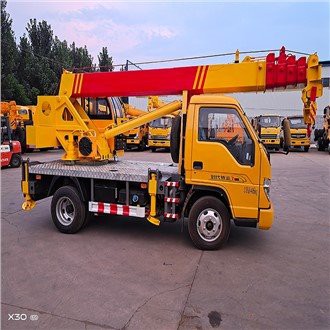
And if you're looking for something a bit more compact but still with decent lifting power, the Mini Size Truck Crane might be the right choice. It's similar to a mini crawler crane but mounted on a truck, which gives it more mobility on paved roads.
So, in conclusion, a mini crawler crane can definitely be used for archaeological excavations. It offers many advantages in terms of maneuverability and lifting capacity, but it also comes with some challenges that need to be addressed. If you're involved in an archaeological project and think a mini crawler crane might be a good fit, I'd be happy to discuss your specific needs. Whether you're looking to rent or buy, I can provide you with the best solutions for your project.
If you're interested in learning more about our mini crawler cranes or any of the other equipment I mentioned, don't hesitate to reach out. We can have a detailed discussion about your requirements and see how we can help you make your archaeological excavation a success.
References
- "Archaeological Excavation Techniques" - A comprehensive guide on the methods and equipment used in archaeological digs.
- "Crane Operations in Challenging Environments" - A technical report that discusses the use of cranes in difficult terrains and sensitive areas.